Recovery First: Build Focus and Motivation by Reducing Allostatic Load
admin_tbl743x
The Better Life Lab
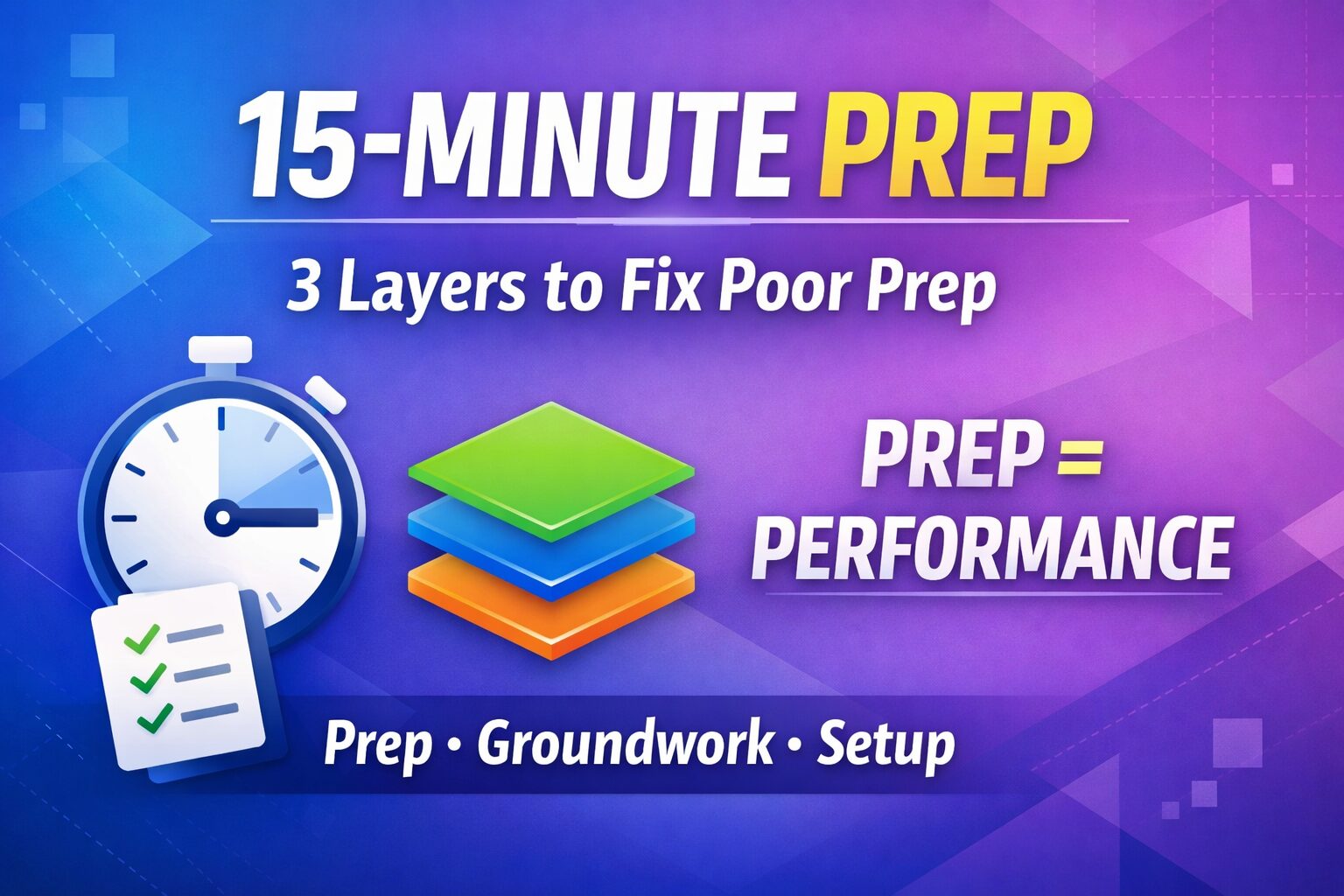
You can often spot low preparation in 15 minutes. People walk into meetings with fuzzy context, improvise answers, and create rework. The cost is not just time—it is judgment errors and lost trust. This article gives you a simple model to explain what “preparation” really means at work. You will learn the three layers (prep, groundwork, setup) and how to coach a teammate with clear, repeatable requests.
When you walk in unprepared, your brain guesses instead of decides. That increases judgment mistakes in meetings, sales calls, and support work. You also create rework because you missed a requirement or a past decision. And once people notice the pattern, they trust you—and your team—less.
Prep is the last check right before action, and it should fit in 15 minutes. Think: review the agenda, scan the latest email, confirm files and links work. Groundwork happens earlier and is broader—research, aligning attendees, updating a proposal. Setup is long-term: habits and relationships that make “help” available when it matters. Many “unprepared” people are actually missing groundwork or setup, not the final check.
Strong performers treat preparation as a small routine, not a heroic effort. Try a 5-minute end-of-day review: what changed, what is next, what you will ask tomorrow. Once a week, choose one “important but not urgent” item to strengthen setup, like a relationship check-in. These small cycles reduce panic and keep your decisions grounded in context.
Avoid vague feedback like “be more prepared.” Diagnose the missing layer, then give one concrete request for next time. Example: “Spend 15 minutes, then bring context, two options, and your recommendation.” Over time, you can move the same person from last-minute searching to steady groundwork and setup.
The biggest mistake is calling everything “preparation” and never naming the real gap. Another is doing groundwork at the last minute and expecting a 15-minute check to save it. Leaders also lose people when they criticize outcomes but do not teach a repeatable process.